O Say Can You Hear
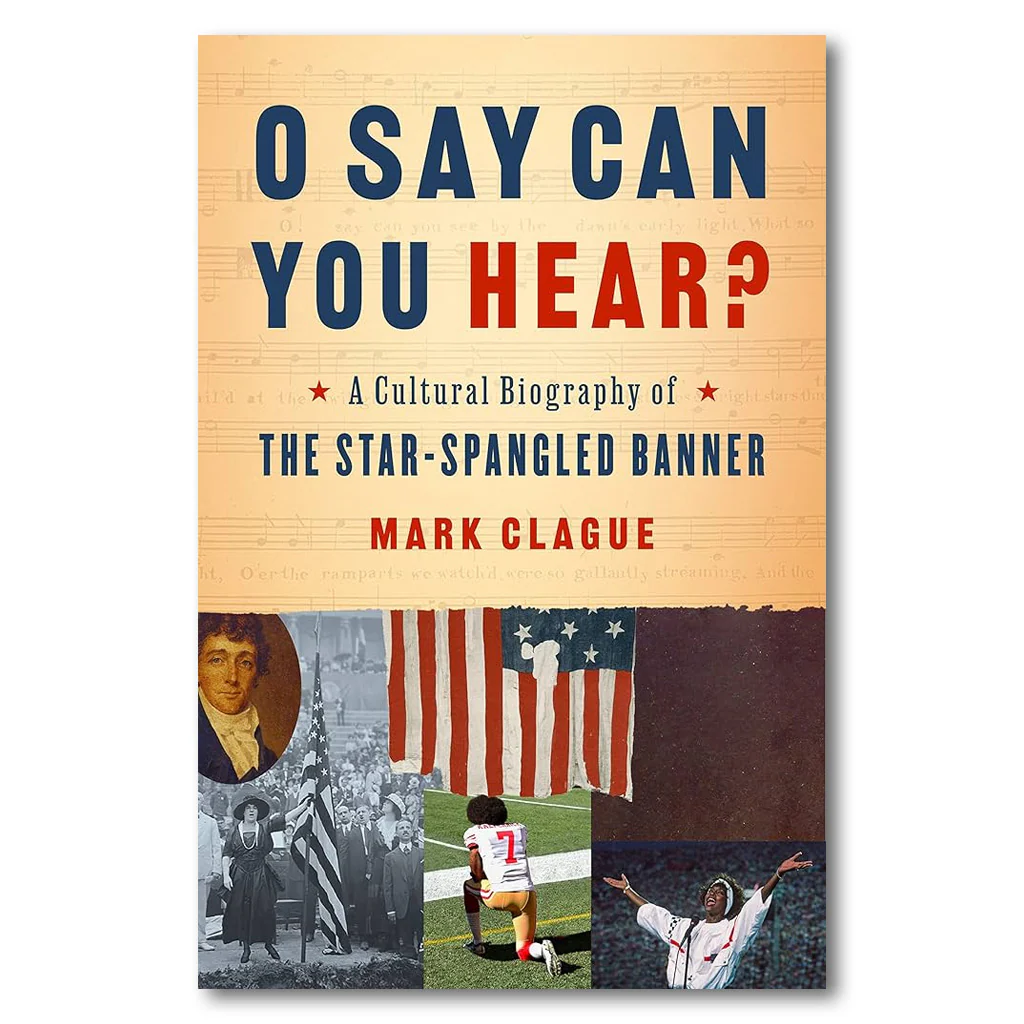
Most Americans learn the tale in elementary school: During the War of 1812, Francis Scott Key witnessed the daylong bombardment of Baltimore’s Fort McHenry by British navy ships; seeing the Stars and Stripes still flying proudly at first light, he was inspired to pen his famous lyric. What Americans don’t know is the story of how this everyday “broadside ballad,” one of thousands of such topical songs that captured the events and emotions of early American life, rose to become the nation’s one and only anthem and today’s magnet for controversy.
In O Say Can You Hear? Mark Clague brilliantly weaves together the stories of the song and the nation it represents. Examining the origins of both text and music, alternate lyrics and translations, and the song’s use in sports, at times of war, and for political protest, he argues that the anthem’s meaning reflects―and is reflected by―the nation’s quest to become a more perfect union. From victory song to hymn of sacrifice and vehicle for protest, the story of Key’s song is the story of America itself.
Each chapter in the book explores a different facet of the anthem’s story. In one, we learn the real history behind the singing of the anthem at sporting events; in another, Clague explores Key’s complicated relationship with slavery and its repercussions today. An entire is chapter devoted to some of the most famous performances of the anthem, from Jimi Hendrix at Woodstock to Roseanne Barr at a baseball game to the iconic Whitney Houston version from the 1991 Super Bowl. At every turn, the book goes beyond the events to explore the song’s resonance and meaning.
From its first lines Key’s lyric poses questions: “O say can you see?” “Does that banner yet wave?” Likewise, Clague’s O Say Can You Hear? raises important questions about the banner; what it meant in 1814, what it means to us today, and why it matters. Written by Mark Clague. Hardcover; 352 pages.
#21119870
O Say Can You Hear
Most Americans learn the tale in elementary school: During the War of 1812, Francis Scott Key witnessed the daylong bombardment of Baltimore’s Fort McHenry by British navy ships; seeing the Stars and Stripes still flying proudly at first light, he was inspired to pen his famous lyric. What Americans don’t know is the story of how this everyday “broadside ballad,” one of thousands of such topical songs that captured the events and emotions of early American life, rose to become the nation’s one and only anthem and today’s magnet for controversy.
In O Say Can You Hear? Mark Clague brilliantly weaves together the stories of the song and the nation it represents. Examining the origins of both text and music, alternate lyrics and translations, and the song’s use in sports, at times of war, and for political protest, he argues that the anthem’s meaning reflects―and is reflected by―the nation’s quest to become a more perfect union. From victory song to hymn of sacrifice and vehicle for protest, the story of Key’s song is the story of America itself.
Each chapter in the book explores a different facet of the anthem’s story. In one, we learn the real history behind the singing of the anthem at sporting events; in another, Clague explores Key’s complicated relationship with slavery and its repercussions today. An entire is chapter devoted to some of the most famous performances of the anthem, from Jimi Hendrix at Woodstock to Roseanne Barr at a baseball game to the iconic Whitney Houston version from the 1991 Super Bowl. At every turn, the book goes beyond the events to explore the song’s resonance and meaning.
From its first lines Key’s lyric poses questions: “O say can you see?” “Does that banner yet wave?” Likewise, Clague’s O Say Can You Hear? raises important questions about the banner; what it meant in 1814, what it means to us today, and why it matters. Written by Mark Clague. Hardcover; 352 pages.
#21119870
Product Information
Product Information
Shipping & Returns
Shipping & Returns
Description
Most Americans learn the tale in elementary school: During the War of 1812, Francis Scott Key witnessed the daylong bombardment of Baltimore’s Fort McHenry by British navy ships; seeing the Stars and Stripes still flying proudly at first light, he was inspired to pen his famous lyric. What Americans don’t know is the story of how this everyday “broadside ballad,” one of thousands of such topical songs that captured the events and emotions of early American life, rose to become the nation’s one and only anthem and today’s magnet for controversy.
In O Say Can You Hear? Mark Clague brilliantly weaves together the stories of the song and the nation it represents. Examining the origins of both text and music, alternate lyrics and translations, and the song’s use in sports, at times of war, and for political protest, he argues that the anthem’s meaning reflects―and is reflected by―the nation’s quest to become a more perfect union. From victory song to hymn of sacrifice and vehicle for protest, the story of Key’s song is the story of America itself.
Each chapter in the book explores a different facet of the anthem’s story. In one, we learn the real history behind the singing of the anthem at sporting events; in another, Clague explores Key’s complicated relationship with slavery and its repercussions today. An entire is chapter devoted to some of the most famous performances of the anthem, from Jimi Hendrix at Woodstock to Roseanne Barr at a baseball game to the iconic Whitney Houston version from the 1991 Super Bowl. At every turn, the book goes beyond the events to explore the song’s resonance and meaning.
From its first lines Key’s lyric poses questions: “O say can you see?” “Does that banner yet wave?” Likewise, Clague’s O Say Can You Hear? raises important questions about the banner; what it meant in 1814, what it means to us today, and why it matters. Written by Mark Clague. Hardcover; 352 pages.
#21119870